Engineering Team ·
Hot Rolled vs. Cold Rolled Steel: Which One Does Your Project Need?
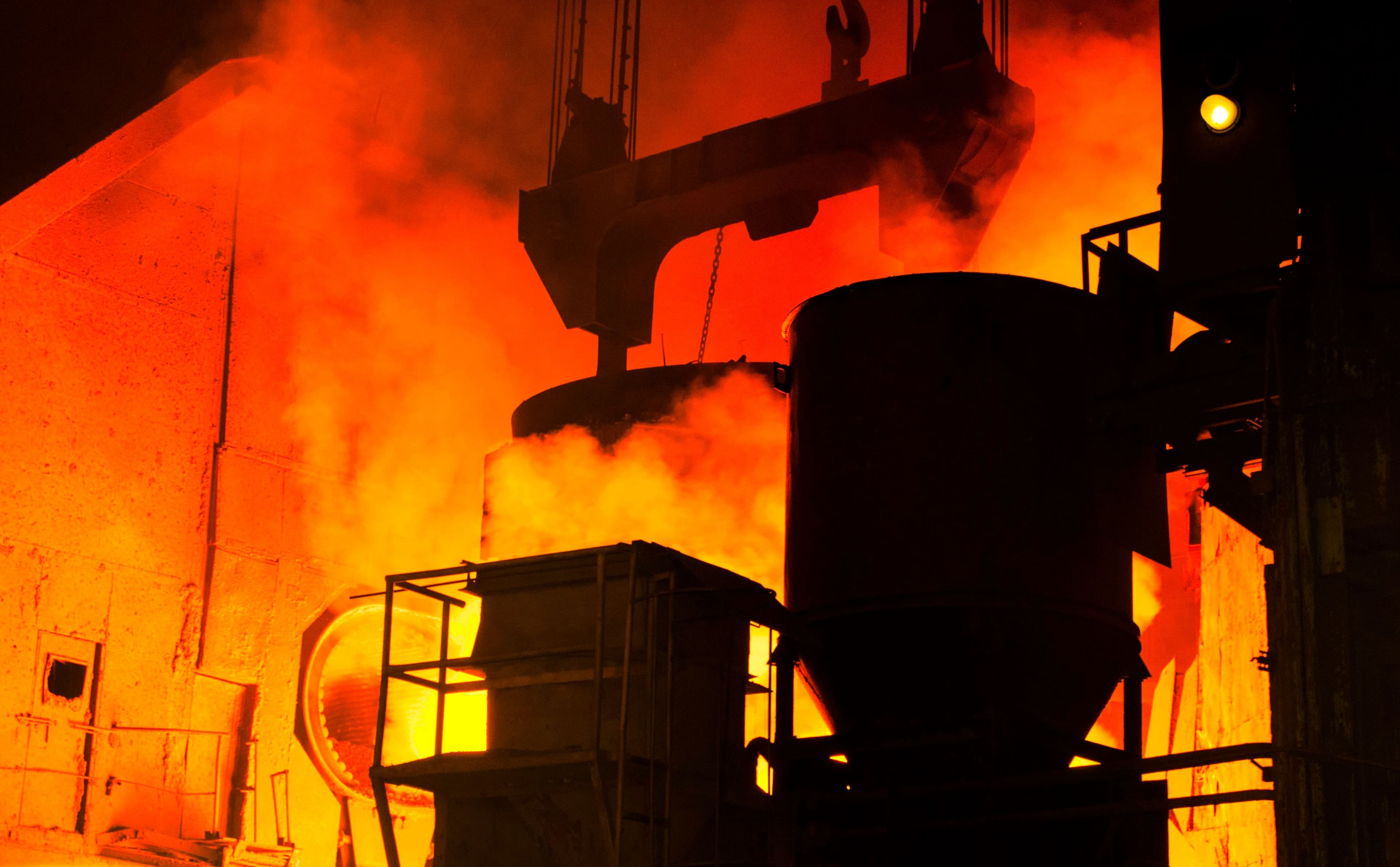
If you've sourced steel coil before, you've likely come across both Hot Rolled Coil (HRC) and Cold Rolled Coil (CRC) — and if you're new to procurement, the difference isn't always obvious from a spec sheet. Both start life as the same base steel, but the way they're processed changes their properties, their cost, and where they belong in your project.
How the two are made
Hot Rolled Coil is produced by rolling steel slabs at temperatures above the material's recrystallization point — typically above 1700°F. Because the steel is soft and workable at this temperature, it can be shaped quickly and economically. The tradeoff is less precision: as the steel cools after rolling, it shrinks slightly and unevenly, which means HRC has looser dimensional tolerances and a rougher, scaled surface finish.
Cold Rolled Coil starts as hot rolled coil that is then processed further at room temperature — through additional rolling, annealing, and often temper rolling. This additional processing tightens the dimensional tolerance considerably and produces a smooth, clean surface finish. It also improves certain mechanical properties, though the additional processing steps make CRC more expensive per ton than HRC.
Where each one fits
For structural fabrication, pipe and tube manufacturing, and general engineering work where the material will be painted, welded, or otherwise finished after fabrication, HRC is almost always the right — and more economical — choice. The rougher surface and looser tolerance simply don't matter once the part is welded into an assembly or coated.
CRC earns its higher price tag in applications where surface finish and tight tolerance actually matter to the finished product: home appliance panels, furniture, and precision stamped or pressed components. If your end customer will see the surface, or if your tooling depends on tight, consistent thickness, CRC is worth the premium.
A quick way to decide
If you're still unsure which to specify, ask two questions: will the surface finish be visible or matter to the final product, and does your process depend on tight dimensional tolerance? If the answer to either is yes, lean toward CRC. If cost efficiency for structural or fabricated work is the priority, HRC is the practical choice.
As always, if you're working from a drawing or specification that calls out a particular grade or finish, that takes precedence — but for projects where the choice is still open, matching the material to how it will actually be used will save you money without compromising the result.